
Blog
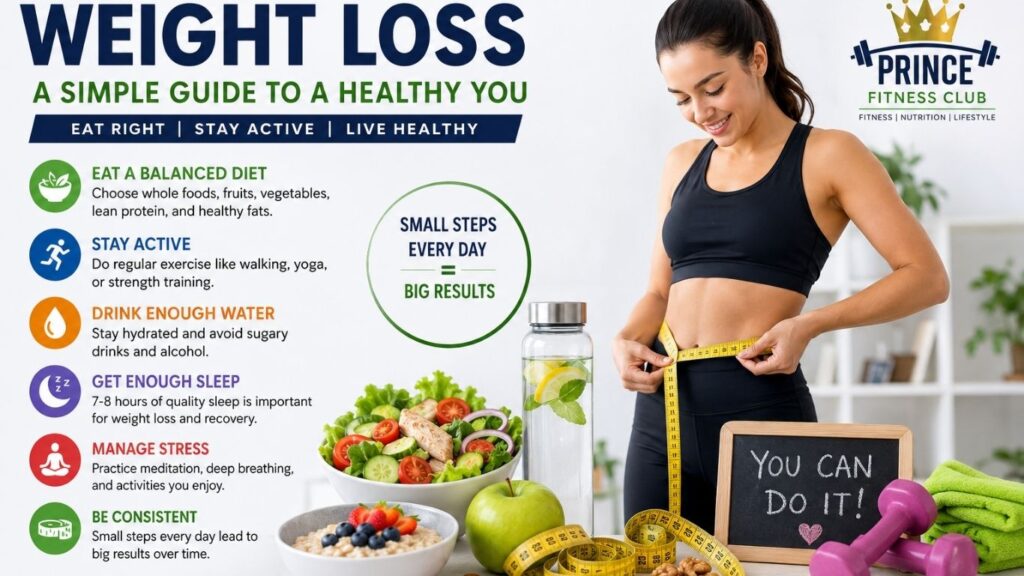
Weight Loss: A Simple Guide to Lose Weight in a Healthy and Sustainable Way
Weight loss is one of the most common health and fitness goals today. Many people want to lose weight, reduce belly fat, look better, feel more active, and improve their overall lifestyle. However, weight loss is not only about eating less or exercising more. A healthy weight loss journey requires the right balance of nutrition, physical activity, sleep, stress management, and consistency.
At Prince Fitness Club, we believe that a healthy lifestyle should be simple, practical, and sustainable. Instead of looking for quick fixes or extreme diets, it is better to develop healthy habits that you can follow for a long time.
In this guide, you will learn what weight loss is, why people gain weight, how to lose weight naturally, what foods can support your weight loss journey, and how to maintain a healthy lifestyle.
What Is Weight Loss?
Weight loss means a reduction in your total body weight. However, healthy weight loss should focus mainly on reducing excess body fat while supporting muscle mass and overall health.
Your body weight can be affected by many factors, including:
- Body fat
- Muscle mass
- Water in the body
- Food and fluid intake
- Daily physical activity
This is why the number on the weighing scale is not the only way to measure progress. Your energy levels, fitness, strength, body measurements, and how your clothes fit can also show positive changes.
Why Do People Gain Weight?
Weight gain can happen for many reasons. In simple terms, when a person regularly consumes more energy than the body uses, the extra energy may be stored as body fat.
However, weight management is not always that simple. Lifestyle, sleep, stress, health conditions, medications, age, and other factors can also affect body weight.
Some common reasons for weight gain include:
1. Eating More Calories Than Needed
Eating large portions or frequently consuming high-calorie foods can increase total calorie intake.
2. Lack of Physical Activity
Sitting for long hours and not getting enough daily movement may reduce the amount of energy your body uses.
3. Too Much Fast Food and Processed Food
Fast food, fried foods, sugary drinks, sweets, and highly processed snacks can provide a large number of calories while sometimes offering limited nutritional value.
4. Poor Sleep
Not getting enough quality sleep may affect appetite, energy levels, and daily food choices.
5. Stress
Some people eat more when they feel stressed, worried, or tired. This is sometimes called emotional eating.
6. Unhealthy Eating Habits
Skipping meals, eating very large portions, frequent snacking, and eating without paying attention to hunger can make weight management more difficult.
How Does Healthy Weight Loss Work?
Healthy weight loss usually happens when your body uses more energy than it receives over time. This is often called a calorie deficit.
However, this does not mean that you should stop eating or follow an extremely low-calorie diet.
A better approach is to:
- Choose nutritious foods
- Control portion sizes
- Stay physically active
- Get enough sleep
- Manage stress
- Follow healthy habits consistently
The goal should not be to lose weight as quickly as possible. The goal should be to build a lifestyle that supports your health and can be maintained over time.
Best Tips for Healthy Weight Loss
1. Eat a Balanced Diet
A balanced diet is one of the most important parts of a healthy weight loss plan.
Your body needs different nutrients, including:
- Protein
- Carbohydrates
- Healthy fats
- Fiber
- Vitamins
- Minerals
- Water
Instead of completely removing one food group, focus on improving the overall quality of your meals.
Include vegetables, fruits, whole grains, pulses, beans, and suitable protein sources in your regular diet.
2. Add Enough Protein to Your Diet
Protein is an important nutrient for the body. It supports the maintenance of muscle mass and can help you feel full for longer.
Vegetarian protein sources include:
- Lentils
- Chickpeas
- Kidney beans
- Soybeans
- Tofu
- Paneer
- Milk
- Curd
- Sprouts
- Moong dal
The right amount of protein depends on your age, body weight, activity level, and individual needs.
3. Eat More Fiber-Rich Foods
Fiber is an important part of a healthy diet. Fiber-rich foods may help you feel full and can support digestive health.
Good sources of fiber include:
- Vegetables
- Fruits
- Salads
- Whole grains
- Oats
- Beans
- Lentils
- Chickpeas
Try to include a variety of plant-based foods in your daily meals.
4. Drink Enough Water
Water is essential for the normal functioning of the body. Staying hydrated is an important part of a healthy lifestyle.
Sometimes people may confuse thirst with hunger. Drinking water regularly throughout the day can help you stay hydrated.
Try to reduce high-sugar drinks such as soft drinks and other sugary beverages. Your individual water needs can vary depending on the weather, activity level, age, and health conditions.
5. Control Your Portion Size
Even nutritious foods can provide more calories than needed if eaten in very large quantities.
Portion control does not mean starving yourself. It means understanding how much food your body needs.
Some simple habits include:
- Use a suitable plate size
- Eat slowly
- Pay attention to hunger
- Stop eating when comfortably full
- Avoid eating directly from large packets
Mindful eating can help you become more aware of your food choices and portions.
6. Reduce Added Sugar
Too much added sugar can increase your daily calorie intake.
Try to limit:
- Soft drinks
- Sugary tea or coffee
- Sweets
- Cakes
- Pastries
- Sugary packaged drinks
- High-sugar snacks
You do not necessarily have to completely avoid every sweet food forever. Balance, frequency, and portion size are important.
7. Limit Highly Processed and Fried Foods
Fried foods and highly processed snacks can be high in calories, salt, sugar, or fat.
Try to eat more home-cooked meals made with simple ingredients.
Choose fresh and minimally processed foods more often. This can make it easier to improve the nutritional quality of your diet.
8. Stay Physically Active
Exercise and daily movement are important parts of a healthy lifestyle.
You do not need to start with a very difficult workout. Choose activities according to your current fitness level.
You can try:
- Walking
- Cycling
- Yoga
- Dancing
- Strength training
- Home workouts
- Taking the stairs
The best physical activity is one that you can do safely and regularly.
9. Walk More Every Day
Walking is one of the simplest ways to increase daily physical activity.
You can increase your movement by:
- Taking short walks
- Using stairs when practical
- Walking during work breaks
- Reducing long periods of sitting
- Taking a light walk after meals if comfortable
Small increases in daily movement can add up over time.
10. Include Strength Training
Many people think weight loss is only about cardio exercise. However, strength training can also be an important part of a balanced fitness routine.
Strength training helps improve strength and supports muscle mass.
Exercises may include:
- Bodyweight squats
- Wall push-ups
- Resistance exercises
- Other exercises suitable for your fitness level
Beginners should focus on correct technique and gradual progress.
11. Get Enough Quality Sleep
Sleep is often ignored in a weight loss journey.
Good sleep supports recovery, energy, and healthy daily routines. Poor sleep may also make healthy eating and exercise habits more difficult to maintain.
Try to:
- Follow a regular sleep schedule
- Reduce screen time before bed
- Create a comfortable sleeping environment
- Avoid very heavy meals immediately before sleep
12. Manage Your Stress
Stress can affect eating habits and daily routines. Some people may eat more or choose comfort foods when they are stressed.
Healthy ways to manage stress may include:
- Meditation
- Yoga
- Deep breathing
- Walking
- Listening to music
- Spending time with family
- Enjoying a hobby
Taking care of your mental well-being is also part of a healthy lifestyle.
How to Reduce Belly Fat?
“How to lose belly fat” is one of the most searched weight loss questions.
It is important to understand that you generally cannot choose exactly where your body loses fat first. Doing only abdominal exercises does not guarantee that fat will disappear only from the stomach area.
A healthy approach to reducing excess body fat includes:
- Eating a balanced diet
- Managing total calorie intake
- Eating enough protein and fiber
- Staying physically active
- Doing strength training
- Getting enough sleep
- Managing stress
- Staying consistent
As overall body fat changes, belly measurements may also change over time.
A Simple Daily Routine for Weight Loss
A healthy routine does not need to be complicated.
Morning: Start your day with water and some light movement according to your ability.
Breakfast: Choose a balanced meal that includes protein and fiber.
Lunch: Include vegetables, a protein source, and a suitable portion of whole grains or other carbohydrates.
Evening: Choose a nutritious snack if you are genuinely hungry and stay active.
Dinner: Eat a balanced meal according to your needs and routine.
Before Bed: Reduce unnecessary screen time and prepare for quality sleep.
This is only a general example. Individual food and activity needs can be different.
Common Weight Loss Mistakes
Many people make mistakes because they want very fast results.
Common mistakes include:
- Starving yourself
- Following extreme crash diets
- Skipping important nutrients
- Eating too little protein
- Avoiding all carbohydrates without a clear reason
- Depending only on the weighing scale
- Expecting results in a few days
- Copying another person’s diet plan
- Exercising too much without enough recovery
- Giving up after a small setback
A successful weight loss journey requires patience and consistency.
Is Skipping Meals Good for Weight Loss?
Skipping meals is not automatically a successful weight loss strategy.
For some people, missing meals can lead to excessive hunger and overeating later. What matters most is the overall quality and quantity of food you eat and whether your routine meets your nutritional needs.
Choose an eating pattern that is practical, balanced, and suitable for you.
Can You Lose Weight Without Going to the Gym?
Yes, a gym is not compulsory for weight loss.
You can stay active through:
- Walking
- Home workouts
- Yoga
- Cycling
- Dancing
- Bodyweight exercises
- Daily household activities
A gym can be useful, but regular movement and a sustainable routine are more important than the location of your workout.
How Long Does Weight Loss Take?
There is no single answer for everyone.
Weight loss can be affected by:
- Starting body weight
- Age
- Food intake
- Physical activity
- Sleep
- Stress
- Health conditions
- Medications
- Consistency
Avoid comparing your progress with someone else. Every person’s body and situation are different.
Focus on steady progress and healthy habits rather than unrealistic promises of very fast results.
How to Stay Motivated During Your Weight Loss Journey
Motivation can change from day to day. This is why habits and routines are more reliable than motivation alone.
Set small and realistic goals.
For example, instead of saying, “I need to lose a lot of weight quickly,” you can focus on goals such as:
“I will walk regularly this week.”
“I will add vegetables to my meals.”
“I will reduce sugary drinks.”
“I will improve my sleep routine.”
Small goals can make the journey easier to manage.
Consistency Is the Key to Weight Loss
You do not need to be perfect every day.
One unhealthy meal does not destroy your progress, just as one healthy meal does not create complete fitness.
What matters is what you do consistently over time.
Focus on simple habits:
- Eat nutritious foods more often
- Stay physically active
- Drink enough water
- Get quality sleep
- Manage stress
- Be patient with the process
Healthy weight management is a long-term journey, not a short-term punishment.
Start Your Healthy Weight Loss Journey with Prince Fitness Club
At Prince Fitness Club, our aim is to promote awareness about healthy weight management, better eating habits, physical activity, and a sustainable lifestyle.
Whether your goal is:
- Weight Loss
- Weight Gain
- Weight Maintenance
- Better Eating Habits
- Improved Fitness
- An Active Lifestyle
the right information, realistic goals, and consistent support can help you build better habits.
We believe that fitness is not only about looking good. It is also about feeling active, building healthy habits, and improving your overall lifestyle.
Conclusion
Healthy weight loss does not require starving yourself, following extreme diets, or searching for overnight results.
A sustainable weight loss journey is based on simple principles: eat a balanced diet, include enough protein and fiber, control portions, stay physically active, drink enough water, sleep well, manage stress, and remain consistent.
Start with small changes. Choose habits that fit your lifestyle and that you can maintain for the long term.
Your weight loss journey does not have to be perfect. It needs to be consistent.
Prince Fitness Club
Weight Loss | Weight Gain | Weight Management | Healthy Lifestyle
Look Good, Feel Good, Live Healthy
Disclaimer
This article is for general educational and informational purposes only. It is not a substitute for medical advice, diagnosis, or an individualized diet plan. If you have a medical condition, take medication, are pregnant, or have special dietary needs, consult a qualified doctor or registered dietitian before making major changes to your diet or exercise routine.